Hi there! Welcome to my blog dedicated to exploring the urban political ecology of Rio de Janeiro. Urban political ecology is a theoretical approach focused on examining the political, social and environmental dimensions of urban problems. As such, the context of the following blog posts will address urban issues specific to Rio de Janeiro.
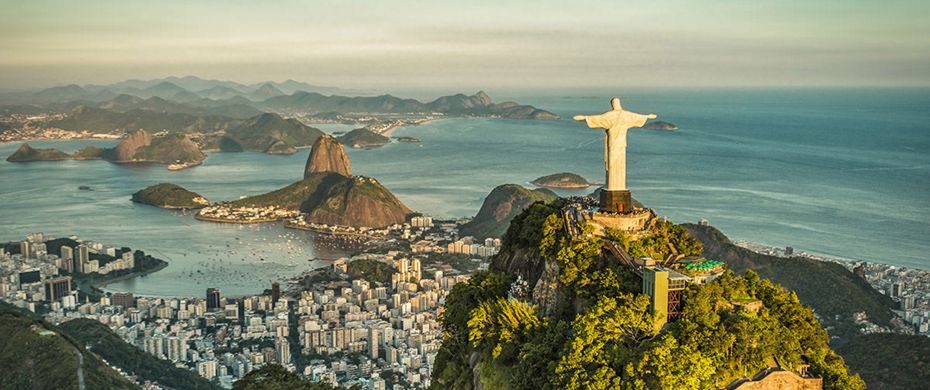
Located on the southeast coast of Brazil, Rio is the second most populated municipality of 6,688,930 (to Sau Paulo) and a core node of the national economy (IBGE 2013). Renowned for its famous landmarks, colourful culture and natural beauty, Rio de Janeiro is indeed a truly global city. After hosting a number of significant events, such as the 1992 and 2012 Earth Summit, the FIFA World Cup (2014) and the Olympics (2016), Rio has established itself as a city of international importance.
After independence from Portuguese colonial powers in the 19thC, Rio went on to become the capital of Brazil (for a short while). The city rapidly industrialised in the early 20thC and began attracting migrants from rural regions in the 1920s. Rapid population growth persisted into the late 20thC due to the agglomeration of industries, leading to a lack of housing and accessible transport (Xavier and Magalhães 2003). As such, the limited space available led to the sprawling of favelas across Rio.
My interest in Rio was piqued when I watch a video by Vox (see below) examining the contrasts between people of the hill (residents of unregulated and informal settlements) and people of the asphalt (residents living in more developed parts of the city). The description underneath summarises the powerful message of the video by simply stating, ‘Rio is hiding poor people’.
Undoubtedly, this powerful statement corroborates with the video to demonstrate the notable, underlying flaws with municipal governance over infrastructural and social issues, causing a vast disparity between cariocas (an encompassing term for all residents of Rio) of different economic status. This inequality has manifested itself spatially into Rio’s landscape, circulating materials and urban environment. The binaries attributed to the hill and the asphalt, for example poor/bourgeois, contaminated/clean and violence/order, are clues to how the process of urban governance has produced spaces of immensely entrenched difference. These distinctions offer interesting points of discussion which I wish to explore further in my blog posts.
List of references:
IBGE (2013) ‘2013 population estimates’ (WWW) Brazilian Institute of Geography and Statistics: Brazilian Institute of Geography and Statistics (WWW) (ftp://ftp.ibge.gov.br/Estimativas_de_Populacao/Estimativas_2013/estimativa_2013_dou.pdf: 29 January 2020).
Silversea (2020) ‘SILVERSEA LUXURY CRUISES TO RIO DE JANEIRO’ (WWW) Silversea: Silversea (https://www.silversea.com/cruise-to/rio-de-janeiro.html: 29 January 2020).
Xavier, H.N. and F. Magalhães (2003) ‘Urban Slums Report: The case of Rio de Janeiro’, Development Planning Unit, University College London: London, UK.
 Urban Political Ecology UCL
This is a really engaging introduction to your blog, and has got me excited for your future posts. It will be particularly interesting to see links between municipal governance, inequality and urban issues in Rio de Janeiro, and how cycles of materials in the city can strengthen the binaries you mentioned in this post.
LikeLiked by 1 person